Breathing Techniques for Everyday Stress Relief and Emotional Balance
In our fast-paced modern world, stress has become an unwelcome companion in daily life. While we cannot always control external circumstances, we possess a powerful tool that's always available: our breath. This comprehensive guide explores evidence-based breathing exercises that can help manage everyday stress and promote emotional balance.
Understanding the Breath-Stress Connection
The relationship between breathing and our emotional state is deeply intertwined through the autonomic nervous system. When we experience stress, our breathing naturally becomes shallow and rapid, triggering the body's fight-or-flight response. Conversely, slow, deliberate breathing activates the parasympathetic nervous system, promoting relaxation and calm.
Research in psychophysiology has demonstrated that conscious breathing practices can significantly reduce cortisol levels, lower blood pressure, and decrease heart rate. These physiological changes create a foundation for improved emotional regulation and mental clarity. By learning to control our breath, we gain access to a natural stress-management tool that requires no equipment and can be practiced anywhere, anytime.
The beauty of breathing exercises lies in their simplicity and accessibility. Unlike many wellness practices that require specific settings or extended time commitments, breathwork can be seamlessly integrated into daily routines. Whether you're sitting in traffic, preparing for an important meeting, or winding down before sleep, these techniques offer immediate support for emotional well-being.
Understanding how breath influences our nervous system empowers us to take an active role in managing stress responses. This knowledge transforms breathing from an unconscious process into a conscious practice that supports mental health and emotional resilience throughout the day.
Diaphragmatic Breathing: The Foundation of Calm
Diaphragmatic breathing, also known as belly breathing or deep breathing, forms the cornerstone of most breathing practices. This technique engages the diaphragm, the dome-shaped muscle beneath the lungs, allowing for fuller, more efficient oxygen exchange. Unlike shallow chest breathing that often accompanies stress, diaphragmatic breathing promotes complete lung expansion and triggers the body's relaxation response.
How to Practice Diaphragmatic Breathing
- Find a comfortable seated or lying position. Place one hand on your chest and the other on your abdomen, just below your ribcage.
- Breathe in slowly through your nose for a count of four, allowing your belly to rise while keeping your chest relatively still. You should feel the hand on your abdomen move outward.
- Pause briefly at the top of the inhale, holding the breath for one or two counts.
- Exhale slowly through your mouth for a count of six, feeling your belly fall as the diaphragm relaxes. The hand on your abdomen should move inward.
- Continue this pattern for five to ten minutes, maintaining a steady, comfortable rhythm without forcing the breath.
The key to effective diaphragmatic breathing is consistency and patience. Initially, this pattern may feel unnatural, especially if you're accustomed to chest breathing. With regular practice, however, diaphragmatic breathing becomes more automatic, and you'll begin to notice its calming effects more quickly.
Benefits of Regular Practice
- Reduces muscle tension throughout the body, particularly in the shoulders and neck
- Improves oxygen delivery to cells, enhancing energy levels and mental clarity
- Lowers heart rate and blood pressure, supporting cardiovascular health
- Enhances focus and concentration by calming the mind
- Supports better sleep quality when practiced before bedtime
Many practitioners find it helpful to practice diaphragmatic breathing for ten minutes each morning and evening. This regular practice creates a foundation of calm that can be accessed throughout the day. When stress arises, even a few cycles of diaphragmatic breathing can help restore equilibrium and emotional balance.
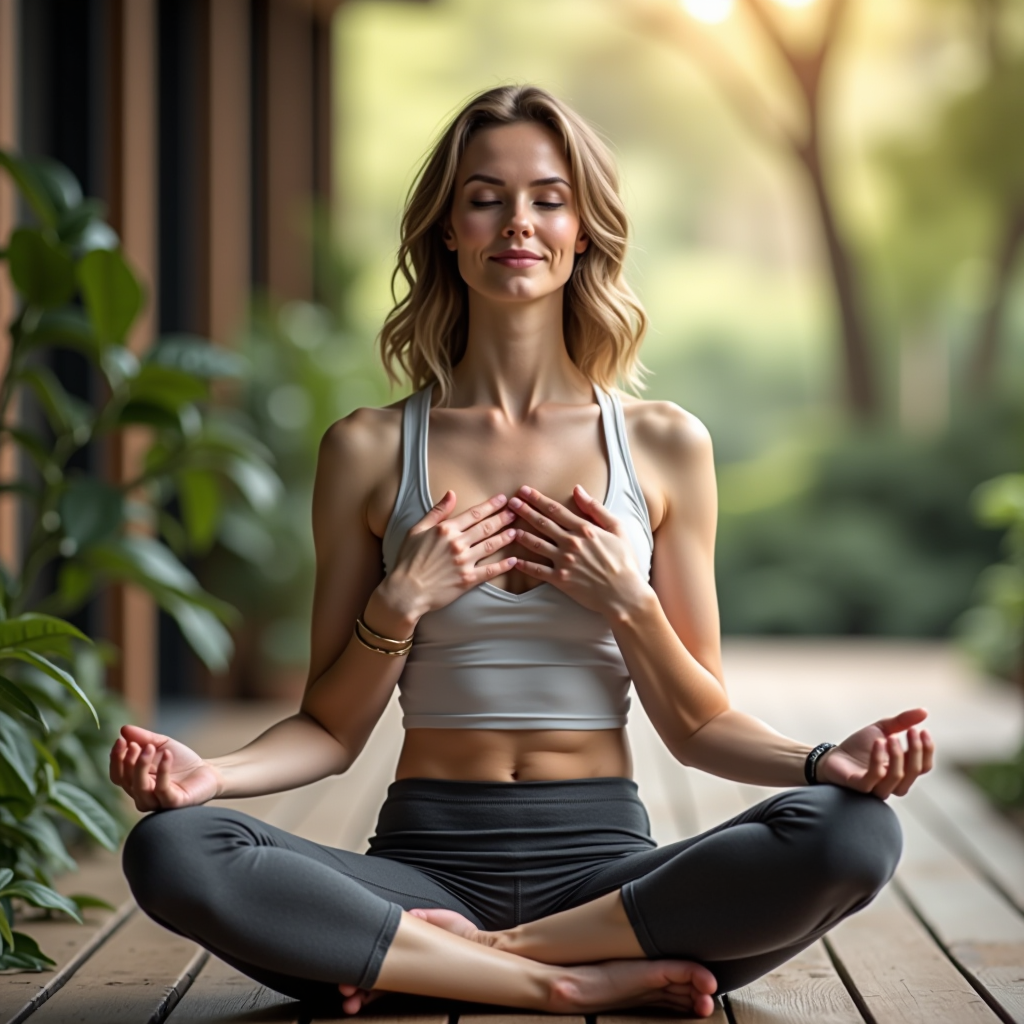
Proper posture supports effective breathing practice and enhances relaxation
Box Breathing: Structure for Stress Management
Box breathing, also called square breathing or four-square breathing, is a structured technique that creates equal intervals for inhalation, retention, exhalation, and pause. This method is particularly effective for managing acute stress and anxiety because its rhythmic pattern gives the mind a focal point, interrupting anxious thought patterns while regulating the nervous system.
Originally developed by Navy SEALs for maintaining calm in high-pressure situations, box breathing has gained widespread recognition as a powerful stress-management tool. The technique's symmetrical structure creates a sense of order and control, which can be especially helpful when emotions feel overwhelming or chaotic.
Box Breathing Step-by-Step Guide
- Sit upright in a comfortable position with your feet flat on the floor and hands resting gently on your lap. Close your eyes or maintain a soft, downward gaze.
- Exhale completely through your mouth, releasing all the air from your lungs to create a clean starting point.
- Inhale slowly through your nose for a count of four, filling your lungs completely from bottom to top.
- Hold your breath for a count of four, maintaining a sense of fullness without tension.
- Exhale slowly through your mouth for a count of four, releasing the breath smoothly and completely.
- Hold your breath with empty lungs for a count of four, resting in the natural pause before the next inhale.
- Repeat this cycle for four to five minutes, or until you feel a sense of calm returning.
The beauty of box breathing lies in its adaptability. While the traditional pattern uses a count of four, you can adjust the timing to suit your comfort level. Beginners might start with a count of three, while experienced practitioners may extend to five or six counts. The essential element is maintaining equal duration for all four phases of the breath cycle.
Box breathing proves particularly valuable during moments of acute stress, such as before public speaking, during difficult conversations, or when facing challenging decisions. The technique's structured nature provides an anchor for attention, preventing the mind from spiraling into worry while simultaneously activating the body's relaxation response.
Regular practice of box breathing enhances its effectiveness. Many people incorporate this technique into their daily routine, practicing for five minutes each morning to establish a calm baseline for the day. Others keep it as a tool for specific stressful situations, finding that even a few cycles can significantly shift their emotional state.
The 4-7-8 Breathing Technique: Natural Tranquilizer
The 4-7-8 breathing technique, developed by Dr. Andrew Weil, is often described as a natural tranquilizer for the nervous system. This method emphasizes an extended exhalation, which activates the parasympathetic nervous system more powerfully than techniques with equal inhale and exhale durations. The extended breath retention and prolonged exhale create a profound calming effect that many practitioners find particularly helpful for managing anxiety and promoting sleep.
What distinguishes the 4-7-8 technique is its specific ratio of inhale, hold, and exhale. This asymmetrical pattern creates a unique physiological response that can induce relaxation more quickly than symmetrical breathing patterns. The extended hold allows for greater oxygen absorption, while the prolonged exhale facilitates the release of carbon dioxide and triggers the relaxation response.
Practicing the 4-7-8 Technique
- Position the tip of your tongue against the ridge of tissue behind your upper front teeth. Maintain this tongue position throughout the entire practice.
- Exhale completely through your mouth, making a whooshing sound as you release all the air from your lungs.
- Close your mouth and inhale quietly through your nose for a mental count of four.
- Hold your breath for a count of seven, maintaining a sense of comfortable fullness without strain.
- Exhale completely through your mouth for a count of eight, making the same whooshing sound. This completes one full cycle.
- Repeat the cycle three more times for a total of four breath cycles. With practice, you can gradually increase to eight cycles.
The 4-7-8 technique requires patience and gentle persistence. Initially, the extended hold and exhale may feel challenging, particularly if you're not accustomed to breath retention. It's important to practice without forcing or straining. If seven counts feels too long for the hold, start with a shorter duration and gradually build up as your capacity increases.
This technique proves especially effective for evening practice, as it can facilitate the transition from wakefulness to sleep. Many practitioners use 4-7-8 breathing as part of their bedtime routine, finding that it quiets racing thoughts and prepares the body for rest. The technique can also be valuable during the day when you need to quickly shift from a state of high stress to calm focus.
When to Use 4-7-8 Breathing
- Before sleep to quiet the mind and prepare for rest
- During moments of acute anxiety or panic to restore calm
- When experiencing anger or frustration to create emotional space
- Before important events to center yourself and reduce nervousness
- During the day when you need to reset and refocus your energy
Consistency enhances the effectiveness of the 4-7-8 technique. Practicing twice daily, even when you're not feeling stressed, builds your capacity to access its calming effects when you need them most. Over time, this practice can become a reliable tool for emotional regulation and stress management.
Integrating Breathing Practices into Daily Life
The true power of breathing exercises emerges when they become integrated into daily routines rather than remaining isolated practices. Creating consistent breathing habits transforms these techniques from occasional stress-relief tools into foundational wellness practices that support ongoing emotional balance and resilience.
Start by identifying natural transition points in your day where breathing exercises can fit seamlessly. Morning routines offer an ideal opportunity to establish a calm baseline before the day's demands begin. Five minutes of diaphragmatic breathing upon waking can set a peaceful tone that influences your entire day. Similarly, practicing box breathing during your commute or before entering the workplace can help you arrive centered and focused.
Midday breathing breaks provide valuable reset points, especially during busy or stressful periods. Setting a reminder to practice 4-7-8 breathing during lunch or between meetings creates regular opportunities to release accumulated tension and restore mental clarity. These brief practices prevent stress from building throughout the day and maintain emotional equilibrium.
Evening breathing practices support the transition from activity to rest. Incorporating diaphragmatic or 4-7-8 breathing into your bedtime routine signals to your body that it's time to wind down, improving sleep quality and promoting overnight recovery. This consistent evening practice can significantly enhance overall well-being by ensuring adequate rest and restoration.
Beyond scheduled practice times, breathing techniques become most valuable when you can access them during moments of acute stress. The key is developing enough familiarity with these methods that they become automatic responses to stress triggers. When you notice tension rising, anxiety building, or emotions intensifying, you can immediately turn to your breath as a stabilizing force.
Creating Your Personal Breathing Practice
Developing a sustainable breathing practice requires experimentation and self-awareness. Each person responds differently to various techniques, and what works beautifully for one individual may feel less effective for another. The goal is to discover which methods resonate with your unique physiology and lifestyle, then build a practice that feels natural and supportive.
Begin by trying each technique separately for several days, noting how your body and mind respond. Pay attention to which practices feel most accessible and which create the strongest sense of calm. Some people find the structure of box breathing most helpful, while others prefer the simplicity of diaphragmatic breathing or the powerful effects of the 4-7-8 technique. There's no single "best" method—only the approach that works best for you.
Consider keeping a simple breathing practice journal where you record which techniques you use, when you practice, and how you feel afterward. This awareness helps you identify patterns and refine your approach over time. You might discover that certain techniques work better at specific times of day or for particular types of stress.
As your practice develops, you may find it helpful to combine techniques or create your own variations. Some practitioners use diaphragmatic breathing as their daily foundation, turning to box breathing for acute stress and 4-7-8 breathing for sleep support. This flexible, personalized approach ensures that you have appropriate tools for different situations and needs.
Remember that building any new habit takes time and patience. Start with manageable commitments—perhaps five minutes of practice once or twice daily—and gradually expand as the practice becomes more natural. Consistency matters more than duration, and even brief daily practice yields more benefits than occasional longer sessions.
Important Wellness Disclaimer
The breathing techniques described in this article are wellness practices designed to support everyday stress management and emotional balance. They are not intended as treatments for anxiety disorders, panic disorders, or other mental health conditions requiring professional care.
While breathing exercises can be valuable complementary practices, they should not replace professional mental health treatment when needed. If you experience persistent anxiety, panic attacks, depression, or other mental health concerns that interfere with daily functioning, please seek support from a qualified mental health professional.
These practices are generally safe for most people, but if you have respiratory conditions, cardiovascular issues, or other health concerns, consult with your healthcare provider before beginning any new breathing practice. If you experience dizziness, lightheadedness, or discomfort during breathing exercises, discontinue the practice and return to normal breathing.
Breathing techniques work best as part of a comprehensive approach to wellness that includes adequate sleep, regular physical activity, balanced nutrition, meaningful social connections, and professional support when needed. They are tools for self-care and stress management, not substitutes for medical or psychological treatment.